Cashmere and merino wool can both make excellent additions to a cold-weather wardrobe, but they serve slightly different purposes. Cashmere is softer, lighter and more luxurious, while merino wool is generally more durable, breathable and practical for everyday wear.
The difference comes down largely to the fiber itself. Quince says its Mongolian cashmere fibers measure approximately 15.8 microns, compared with around 18–22 microns for merino wool. Finer fibers generally create a softer sensation against the skin. Merino, meanwhile, has natural temperature-regulating and moisture-wicking properties that make it particularly useful for layering and active everyday wear.
For shoppers building a versatile US wardrobe, there isn't a universal winner. A cashmere crewneck can become your polished cold-weather staple, while a merino sweater can handle commuting, travel and repeated layering.
Here's how the two compare and when each one makes more sense.
What is the difference between cashmere and merino wool?
Cashmere is finer and softer, while merino wool is more resilient and naturally suited to temperature regulation and moisture management.

Feature | Cashmere | Merino Wool |
|---|---|---|
Softness | Excellent | Very good |
Warmth-to-weight | Excellent | Very good |
Breathability | Good | Excellent |
Moisture management | Good | Excellent |
Natural stretch | Limited | Better |
Durability | Requires more care | Generally more forgiving |
Best for | Luxury everyday layers | Everyday and active layers |
Typical feel | Silky and exceptionally soft | Smooth, warm and slightly more structured |
The difference is especially noticeable when you're wearing a sweater directly against your skin.
Cashmere feels exceptionally soft because its fibers are finer. Merino can still feel very smooth, but its slightly larger fibers give it a different character.
Is cashmere softer than merino wool?
Yes. Cashmere is generally softer because its fibers are finer than those of merino wool.
Quince states that its Mongolian cashmere measures approximately 15.8 microns, compared with 18–22 microns for its merino wool.
That difference might sound tiny, but you can notice it in a lightweight sweater worn against your neck or arms.
This is where cashmere earns its reputation.
A simple cashmere crewneck can make an otherwise ordinary jeans-and-trousers wardrobe feel more elevated without requiring a complicated outfit.
Quince currently offers Mongolian cashmere sweaters in several silhouettes, including crewnecks, cardigans, tees and other styles.
Is merino wool better for everyday wear?
Merino wool is often the more practical choice when you want a sweater that can handle regular wear, layering and changing temperatures.

Merino naturally regulates temperature and manages moisture, making it useful when you're moving between chilly outdoor conditions and heated indoor spaces. Quince describes its Australian merino as naturally thermoregulating and odor-resistant.
That's particularly useful for:
Commuting
Travel
Layering
Outdoor activities
Long days away from home
Transitional weather
Merino also has more natural elasticity than cashmere, which helps it hold its shape during active wear.
If you're looking for one sweater that gets worn constantly, merino deserves serious consideration.
Which is warmer: cashmere or merino wool?
Both can be warm, but cashmere offers excellent warmth for its weight and can feel lighter than a similarly warm wool sweater.
That's one reason cashmere works so well for lightweight winter layers.
Merino can provide substantial warmth too, particularly in heavier knits. Quince distinguishes between its standard heavyweight Australian merino and Superfine merino: heavyweight yarns are intended for substantial warmth, while Superfine merino uses thinner fibers for lighter layering.
So don't judge warmth simply by the material name.
Fiber, yarn weight, knit density and garment construction all matter.
A heavy merino cardigan can obviously be warmer than an ultra-light cashmere tee.
Is merino wool more durable than cashmere?
Generally, yes. Merino is the better choice if your priority is a hard-working sweater that can tolerate frequent use.
Cashmere is a delicate natural fiber and needs more thoughtful care. Even good-quality cashmere can develop some surface pilling, particularly during the first few wears.
Quince says its cashmere uses longer 34–36 mm fibers and a 12-gauge knit designed to help resist pilling, although minor pilling is still a natural characteristic of cashmere.
Merino's denser fiber structure makes it somewhat more forgiving for everyday use.
That doesn't mean you can treat merino like a cotton sweatshirt. Both materials benefit from proper washing and storage.
Which is easier to care for: cashmere or merino?
Merino is generally the easier-care option, although both fabrics should be washed gently and dried flat.
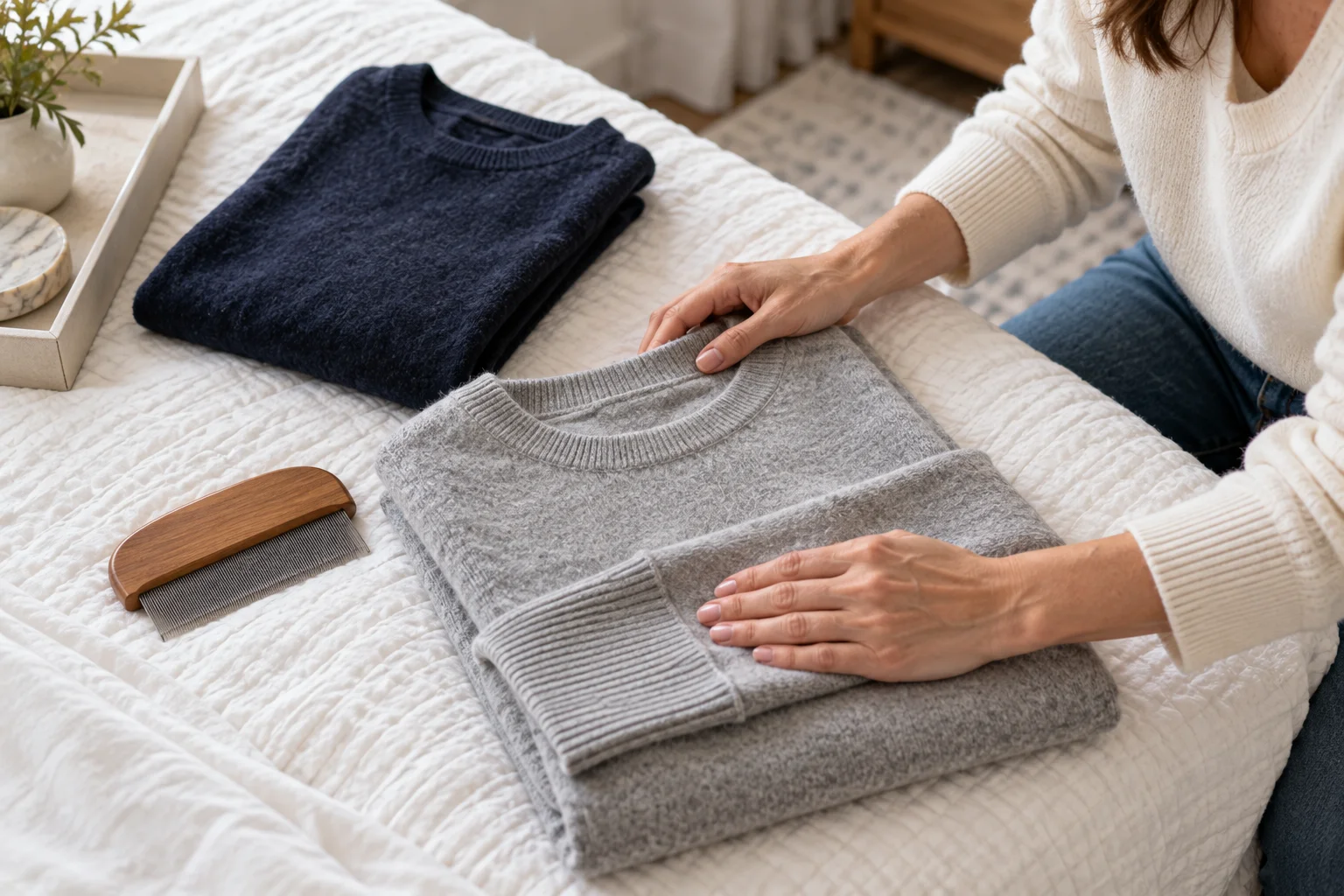
Quince recommends cool hand washing or a wool/delicate machine cycle in a mesh bag for both cashmere and merino, followed by laying the garment flat to dry. Wet sweaters shouldn't be hung because the weight can stretch the fibers.
For cashmere, a cashmere comb can help manage surface pilling.
For either material, avoid bleach and excessive heat.
One simple habit makes a big difference: don't automatically wash a wool sweater after every wear.
If it isn't dirty or noticeably soiled, airing it out may be enough.
Is Quince cashmere worth considering?
Quince is particularly relevant for shoppers who want cashmere without moving into traditional luxury-retail pricing.
The brand says it sources Grade-A Mongolian cashmere directly from mills serving the specialty cashmere market and uses a factory-direct model to reduce traditional wholesale and retail markups.
Its current US site lists the Mongolian Cashmere Crewneck at $50 in the Everyday Steals section, making it one of the more accessible ways to add cashmere to a wardrobe at the time of writing.
That doesn't mean every Quince cashmere piece will have the same price or that a promotional price will remain available indefinitely.
Check the individual product page before purchasing.
What merino wool does Quince offer?
Quince's merino collection includes both heavier Australian merino pieces and lighter Superfine merino options.

The heavier Australian merino range is designed around substantial sweaters and layering pieces such as crewnecks, cardigans, turtlenecks and half-zips. Superfine merino uses thinner, longer-staple fibers for a smoother and lighter feel.
That gives shoppers more flexibility than simply choosing between "cashmere" and "wool."
If you're building a wardrobe for a cold Northeast winter, heavyweight merino may make more sense.
If you're layering during fall or spring, Superfine merino can be easier to work into an outfit.
Should you buy cashmere or merino wool?
Choose cashmere for softness, lightweight warmth and a more luxurious feel. Choose merino for durability, temperature regulation and frequent everyday wear.
A useful wardrobe strategy is to own both.
Start with a merino sweater if you're looking for a practical everyday layer.
Add a cashmere crewneck or cardigan when you want something softer and more elevated for weekends, dinners, travel or cold-weather layering.
You don't need ten wool sweaters.
Two or three well-chosen pieces can cover a surprising number of outfits.
Cashmere vs Merino Wool FAQs
Is cashmere better than merino wool?
Neither is universally better. Cashmere is softer and lighter, while merino generally offers better durability, stretch and temperature regulation.
Which is warmer, cashmere or merino?
Both can be warm. Cashmere offers excellent warmth relative to its weight, while heavier merino garments can provide substantial insulation.
Does merino wool feel itchy?
Fine merino is generally much smoother than traditional coarse wool. Fiber diameter matters, so look for finer merino if you're sensitive to wool textures.
Does cashmere pill?
Some pilling is normal with cashmere, especially during the first few wears. Quince recommends using a cashmere comb to manage surface pills.
Can you wear merino wool every day?
Yes. Its temperature regulation, moisture management and natural odor resistance make merino particularly useful for repeated wear and layering.
Is Quince cashmere real cashmere?
Quince says its cashmere collection uses Grade-A Mongolian cashmere, including fibers measuring approximately 15.8 microns.
The Bottom Line
Cashmere wins when softness and lightweight luxury are the priority. Merino wins when you need a durable, breathable sweater that can keep up with everyday life.
For a wardrobe that gets regular wear, merino is an excellent foundation. For those moments when you want something exceptionally soft and polished, cashmere is difficult to beat.
And you don't have to choose only one.
Quince's US collection makes it possible to build a wardrobe around both materials, from Mongolian cashmere crewnecks and cardigans to Australian merino sweaters and lighter Superfine merino layers. With its current Everyday Steals section also featuring a $50 Mongolian Cashmere Crewneck, it's worth checking the official site for current pricing before you buy.