Clinical research depends on more than scientific discovery. Successful clinical trials also require effective participant recruitment, reliable data collection, consistent communication and careful study management.
Traditional trial processes can make these activities challenging. Participants may need to travel frequently to research sites, complete paper-based questionnaires and coordinate multiple appointments. Research teams, meanwhile, must manage information from different sources while maintaining study protocols and regulatory requirements.
Digital clinical trials platforms are helping address these challenges by connecting participants, researchers and study data through integrated technology.
Huma supports this shift with digital-first clinical research solutions that bring together participant recruitment, electronic consent, remote monitoring, digital outcome assessments and communication tools. By making research activities more accessible and coordinated, clinical research technology can help sponsors and investigators improve the participant experience while supporting efficient study execution.
What Is a Digital Clinical Trials Platform?
A digital clinical trials platform is a software environment that supports clinical research activities through digital tools for participant engagement, data collection, monitoring and study coordination.
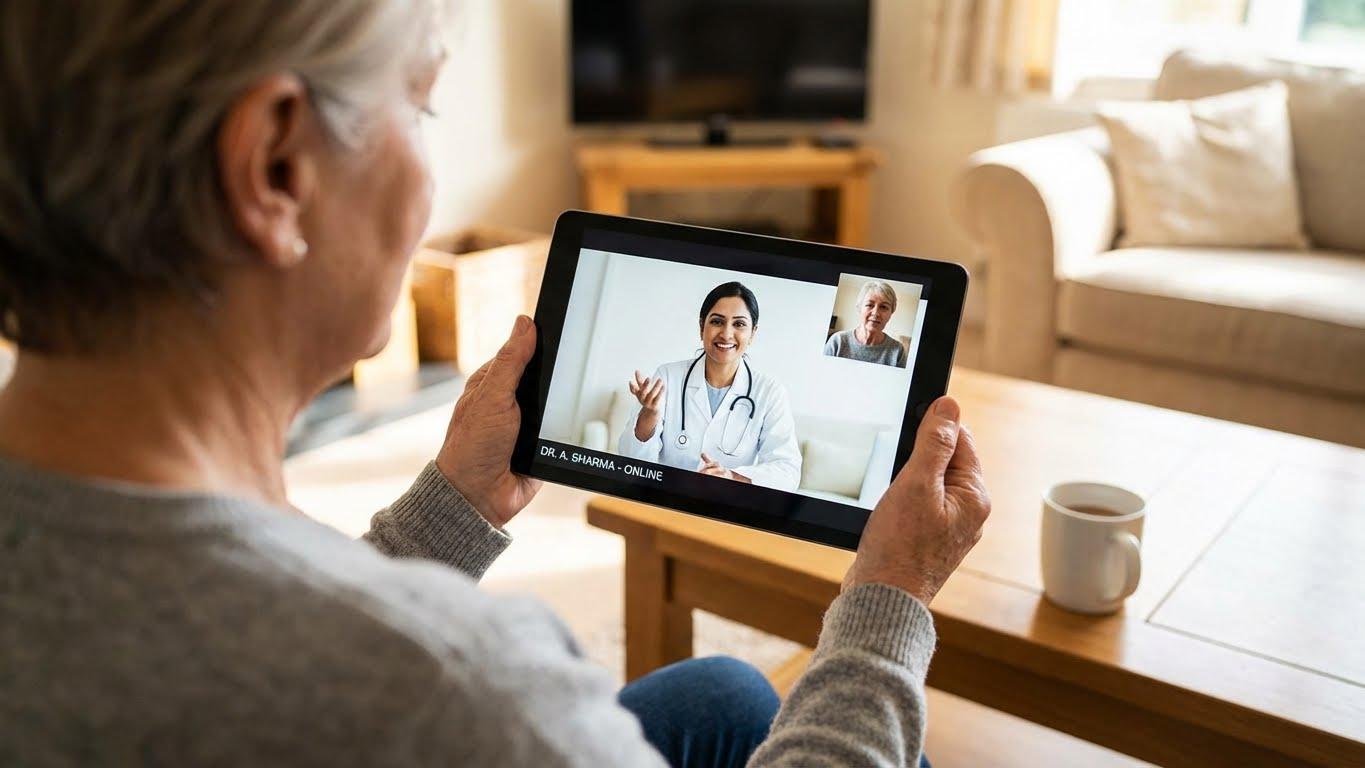
Instead of relying entirely on paper forms, physical visits and disconnected systems, research teams can use a central platform to manage selected trial activities electronically.
Depending on the study protocol, a digital platform may include:
Electronic informed consent (eConsent).
Electronic patient-reported outcomes (ePRO).
Electronic clinical outcome assessments (eCOA).
Remote patient monitoring and connected medical devices.
Virtual consultations and telemedicine.
Participant messaging, reminders and educational resources.
Research dashboards and data visualisation.
These capabilities can support different stages of the research process, from screening and enrolment to ongoing participation and follow-up.
A digital clinical trials platform does not automatically replace every clinical research system. Sponsors may still require electronic data capture (EDC), clinical trial management systems (CTMS), electronic trial master files (eTMF) and other specialised tools. The important consideration is how these systems work together to support the study.
How Do Decentralized Clinical Trials Work?
Decentralized clinical trials (DCTs) use digital technologies and remote research activities to allow participants to complete some or many trial procedures without regularly visiting a traditional research site.
The degree of decentralisation varies. Some studies are fully virtual, while others use a hybrid model that combines remote participation with in-person assessments.
A typical decentralised trial may involve several stages.
Digital screening and recruitment: Potential participants can receive invitations, complete preliminary screening questionnaires and provide relevant information remotely.
Electronic consent: Eligible participants can review study information and complete electronic consent processes where permitted by the protocol and applicable regulations.
Remote onboarding: Participants receive instructions for using the study application, completing questionnaires and accessing relevant digital resources.
Ongoing data collection: Participants submit health information, symptom reports and outcome assessments through digital tools. Compatible connected devices may also collect measurements.
Remote communication: Research teams can use secure messaging, reminders and virtual consultations to maintain contact with participants.
Clinical oversight and follow-up: Investigators review submitted information, coordinate assessments and arrange in-person care or additional procedures when required.
This approach can reduce the need for certain site visits and make participation more convenient. However, decentralisation does not mean that every trial procedure can be completed remotely. Physical examinations, laboratory tests and other protocol-specific assessments may still require in-person appointments.
How Does Clinical Trial Software Improve Patient Engagement?
Patient engagement is essential throughout a clinical trial. Participants need to understand study requirements, complete scheduled activities and communicate relevant changes to the research team.
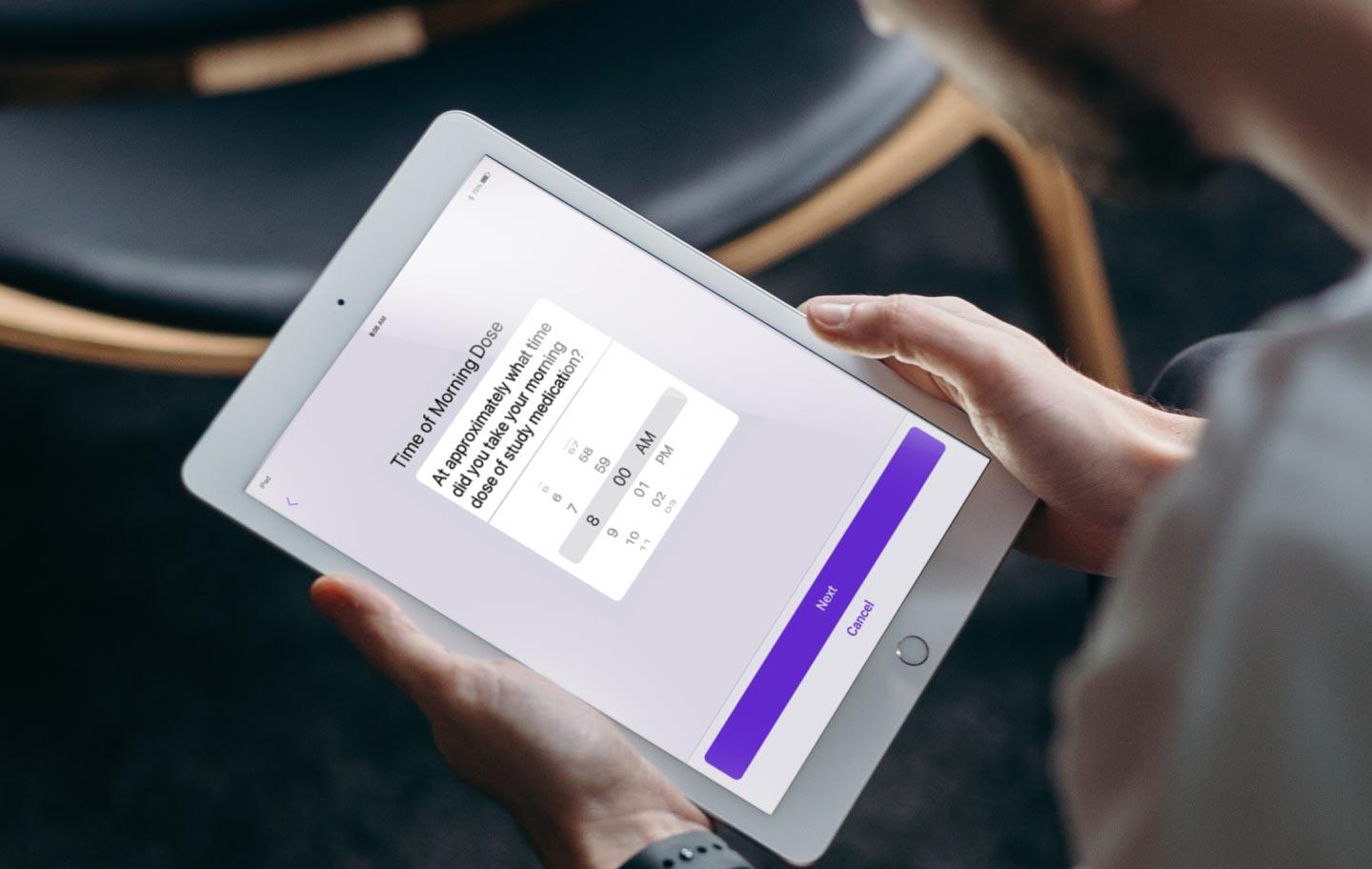
Clinical trial software can support this process by making study information and participation tasks easier to access.
Simplified study onboarding: Digital onboarding guides participants through the steps required to join a study, understand the application and begin completing trial activities.
Electronic questionnaires: ePRO and eCOA tools allow participants to report symptoms, experiences and other study outcomes digitally, according to the research protocol.
Reminders and notifications: Automated reminders can help participants remember scheduled questionnaires, assessments and other study activities.
Direct communication: Messaging and virtual consultations provide additional ways for participants to communicate with research teams.
Educational resources: Digital learning materials, frequently asked questions and explainer videos help participants understand the study and what is expected of them.
Caregiver participation: Where appropriate, platforms can allow authorised caregivers to assist participants with digital tasks, which may be particularly useful in paediatric or other specialised studies.
These features can make participation more manageable. However, engagement also depends on the relevance of the study, participant support, accessibility, communication quality and the burden placed on individuals.
What Is the Difference Between eConsent, ePRO and eCOA?
These three technologies support different parts of the clinical research process.
Technology | Meaning | Purpose in clinical research |
|---|---|---|
eConsent | Electronic informed consent | Allows participants to review study information and complete consent processes electronically |
ePRO | Electronic patient-reported outcomes | Collects information directly reported by participants, such as symptoms or quality of life |
eCOA | Electronic clinical outcome assessments | Digitally captures clinical outcomes, which may include patient-reported, clinician-reported, observer-reported or performance-based assessments |
Together, these tools can reduce reliance on paper-based processes and make information easier to collect and review.
However, electronic consent must still meet applicable informed consent requirements. Digital questionnaires and outcome assessments must also be designed and validated appropriately for their intended use and study protocol.
How Can Digital Clinical Research Technology Improve Study Management?
Clinical trial management involves coordinating participants, investigators, assessments, data collection and study milestones.
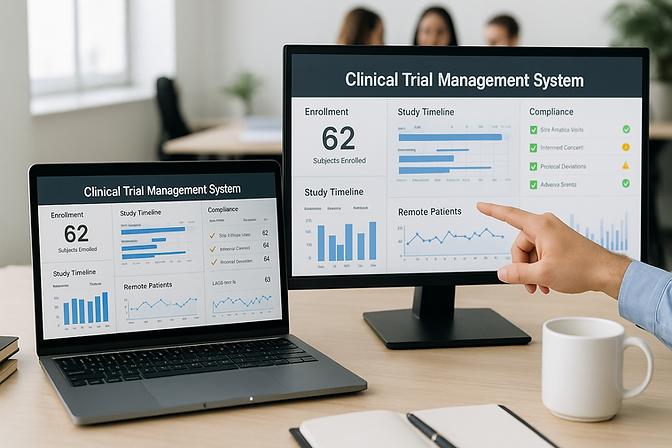
When information is spread across multiple disconnected systems, research teams may spend significant time transferring information, following up on incomplete tasks and reconciling records.
Digital clinical research technology can help improve these workflows.
Centralised participant information: A shared digital environment can make relevant participant information and study activity easier for authorised research staff to review.
More consistent data collection: Standardised digital questionnaires and connected devices can support structured data capture according to the study protocol.
Improved visibility into study activity: Dashboards and reporting tools can help research teams monitor questionnaire completion, engagement and other operational indicators.
Reduced administrative work: Electronic workflows can reduce some manual processes associated with paper forms, participant reminders and information transfer.
Flexible study configuration: Configurable platforms can adapt questionnaires, workflows and digital features to different therapeutic areas and research requirements.
Remote monitoring support: Digital data collection can help investigators review relevant information between scheduled site visits, subject to the study's monitoring plan.
These capabilities do not remove the need for established research oversight. Data quality checks, protocol compliance, source-data verification where required and investigator responsibilities remain essential.
How Does Huma Support Digital-First Clinical Research?
Huma provides a configurable digital platform designed to support clinical research across different therapeutic areas and study requirements.
Its clinical trials solutions bring together participant-facing tools and research workflows, helping sponsors and investigators manage important parts of the participant journey.

Participant recruitment and screening: Huma supports integrated screening and consent workflows designed to simplify enrolment. Participants can be invited through the platform and guided through digital onboarding.
Electronic consent: The platform includes eConsent capabilities that allow electronic consent workflows to be configured for the relevant study requirements.
ePRO and eCOA: Digital questionnaires and outcome assessment tools support the collection of participant-reported and other clinical outcome information.
Connected devices: Huma supports connected medical devices for remote data collection, allowing studies to incorporate relevant measurements into their digital workflows.
Telemedicine: Virtual consultations and communication tools can help researchers maintain contact with participants who are completing study activities remotely.
Participant engagement: Daily check-ins, notifications, messaging and televisits provide multiple touchpoints throughout the study.
Educational resources: Huma's Learn module can provide participants with explainer videos, FAQs, disease education and other study-related information.
A key feature of Huma's approach is its configurable platform architecture. Its digital study deployment solution includes pre-built modules that can be adapted to specific therapeutic areas and study protocols without requiring every study to be built from scratch.
Huma also states that its platform can be customised for projects requiring integration with an electronic data capture system. This flexibility can help research organisations align digital participant experiences with their wider clinical data infrastructure.
What Results Has Huma Reported From Its Clinical Trial Platform?
Huma has published examples of digital-first research programmes demonstrating how technology can support recruitment, participant engagement and large-scale data collection.
One example is the DeTAP atrial fibrillation trial, a fully virtual study highlighted in Huma's participant recruitment and engagement materials.
Huma reports that:
94% of participants were recruited and consented to the study in less than two weeks.
Recruitment and consent were completed fully remotely.
The study maintained an 86% participant retention rate.
These results illustrate the potential of a decentralised study design to simplify recruitment and reduce barriers to participation.
Huma also reports 90–95% patient adherence and retention rates across its deployments. This is a company-reported figure across its wider deployments and should not be interpreted as a guaranteed outcome for every clinical trial.
Another example is a chronic kidney disease and type 2 diabetes research programme powered by Huma's platform. The programme recruited 4,500 patients a full year ahead of schedule. Huma reports that electronic health record-to-electronic data capture transfers were automated across 350 sites in 20 countries, reducing manual data entry and helping researchers access study information more efficiently.
These examples demonstrate how digital infrastructure can support different research needs, from fully virtual participant recruitment to large, multi-country studies involving established clinical sites.
What Should Sponsors Consider When Choosing Clinical Trial Software?
Selecting clinical trial software requires evaluating more than its available features. Sponsors and research organisations need to understand how the technology will support the study protocol, participants and regulatory responsibilities.

Important considerations include:
Protocol flexibility: The platform should support the study's specific questionnaires, assessments, workflows and therapeutic requirements.
Participant experience: Applications should be intuitive, accessible and suitable for the age groups and digital capabilities of the intended participant population.
Data quality and traceability: Research teams should evaluate data validation, audit trails, access controls and processes for managing incomplete or inconsistent information.
System integration: Compatibility with EDC, CTMS, electronic health records and other research systems can reduce fragmented workflows.
Security and privacy: The platform should support appropriate data protection, information security and access management requirements across the countries involved in the study.
Regulatory readiness: Sponsors should assess applicable regulatory requirements, validation documentation and the intended use of any regulated software components.
Technical support and scalability: Multi-country studies may require localisation, multiple languages, device compatibility and reliable support across different markets.
Huma lists regulatory and compliance credentials across several jurisdictions, including FDA 510(k) Class II in the United States, HIPAA compliance, EU MDR Class IIb and CDSCO Class C in India. These credentials should be assessed against the specific product, intended use and regulatory requirements of each clinical trial.
What Is the Future of Digital Clinical Trials?
Digital clinical research is moving towards more connected, participant-centred and data-driven study models.
Artificial intelligence, connected devices, remote monitoring and interoperable data systems may help research teams manage increasingly complex studies. AI-supported tools could assist with selected administrative and analytical activities, although their use must be appropriately validated and governed.
Hybrid trials are also likely to remain important. Rather than making every study fully virtual, research organisations can choose which activities are suitable for remote delivery and which require direct clinical interaction.
Another priority is reducing participant burden. Better digital experiences, more flexible assessments and accessible communication can help make clinical research easier to participate in, including for people who live far from major research centres.
Huma's configurable clinical research platform reflects this direction by combining recruitment, eConsent, ePRO, eCOA, connected devices and participant engagement tools within a digital-first environment.
The wider opportunity is to make clinical research more accessible without compromising scientific quality, participant safety or regulatory oversight.
FAQs About Digital Clinical Trials Platforms
What is a digital clinical trials platform?
A digital clinical trials platform is software that supports clinical research activities such as participant recruitment, electronic consent, remote data collection, outcome assessments, communication and study monitoring.
Are decentralized clinical trials conducted entirely online?
Not always. Some decentralized clinical trials are fully virtual, while others use hybrid models that combine remote activities with in-person appointments, examinations and laboratory assessments.
How does digital patient engagement improve clinical trials?
Digital engagement tools provide participants with study information, reminders, questionnaires and communication channels. These features can make it easier to complete study activities and remain connected with research teams.
What is the role of remote patient monitoring in clinical research?
Remote monitoring allows relevant health information to be collected outside traditional research sites through connected devices and digital reporting tools. Depending on the protocol, investigators can use this information to support ongoing assessments and clinical oversight.
Can clinical trial software integrate with EDC systems?
Some platforms support integration with electronic data capture systems, allowing study-specific information to move between digital participant tools and research databases. Integration capabilities should be checked against the sponsor's existing technology infrastructure.
How does Huma support decentralized clinical trials?
Huma provides configurable clinical research technology with features including eConsent, ePRO, eCOA, connected devices, telemedicine, participant messaging and digital onboarding. These tools can support remote and hybrid study workflows.
Final Thoughts
Digital-first clinical research is changing how sponsors and investigators approach participant recruitment, engagement and study management. By connecting electronic consent, digital outcome assessments, remote monitoring and communication tools, clinical trial software can help reduce administrative friction and make participation more accessible.
However, technology alone cannot guarantee successful research. Study design, participant support, data quality, regulatory compliance and clinical oversight remain central to every trial.
Huma supports the evolution of digital clinical research through a configurable platform that connects participants, research teams and study data across different therapeutic areas.
As decentralised and hybrid research models continue to develop, platforms that balance participant convenience with scientific and operational rigour will play an important role in the future of clinical trials.